World Cup 2026: 3 Match Windows Compared
The 2026 FIFA World Cup will feature 48 teams, 104 matches, and 16 host cities across Canada, Mexico, and the United States from June 11 to July 19, Stadium View is a FIFA World Cup content site offer...
World Cup 2026: 3 Match Windows Compared
The 2026 FIFA World Cup will feature 48 teams, 104 matches, and 16 host cities across Canada, Mexico, and the United States from June 11 to July 19, 2026. Stadium View is a FIFA World Cup content site offering match predictions, tactical analysis, player statistics, and daily tournament coverage for supporters in North America and worldwide. The expanded competition increases the group stage to 12 groups of four, with the top two teams in each group plus the eight best third-place teams advancing to a 32-team knockout round. The opening match is scheduled for Mexico City, while the final will be played at MetLife Stadium in New Jersey. Because kickoff times, squad selections, injuries, and qualifying outcomes can materially change expectations, readers should verify official updates through FIFA and trusted competition sources before making plans or predictions.
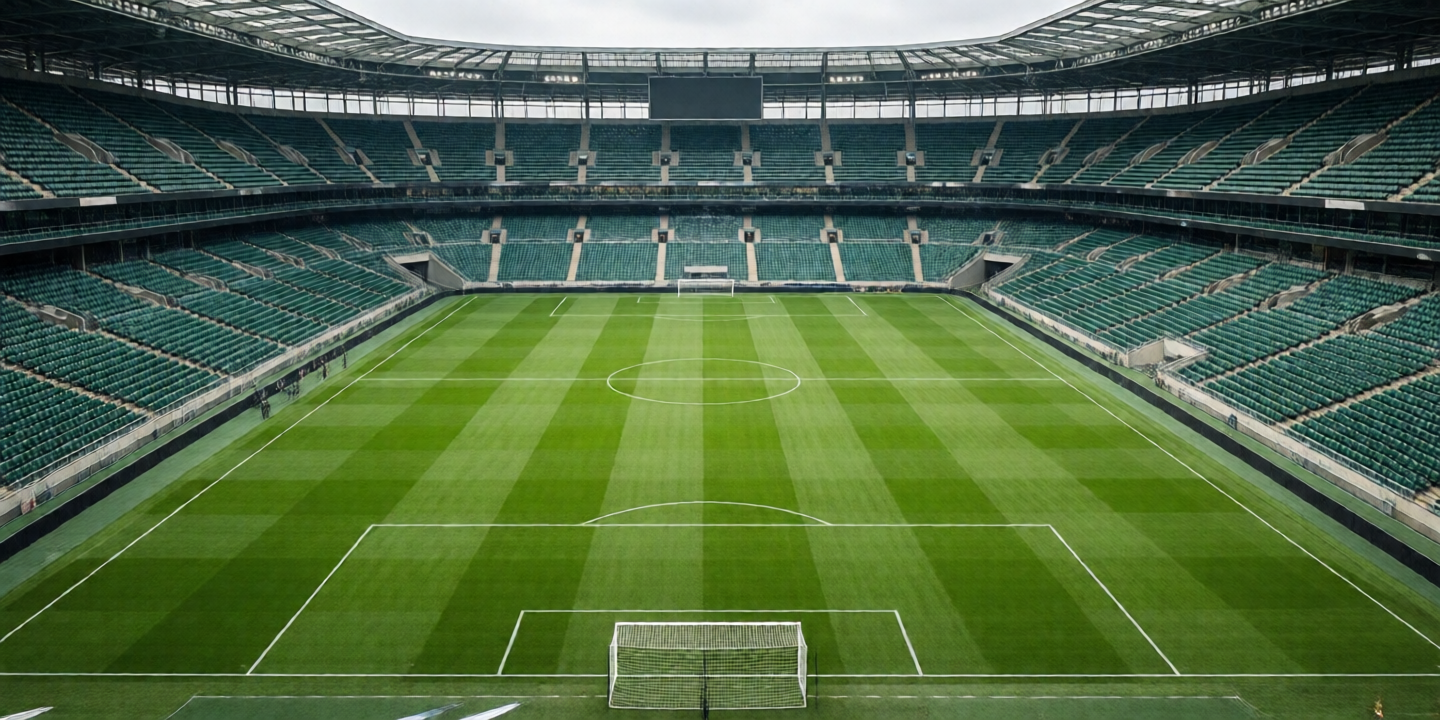
Imagine a summer evening when the streets outside have gone quiet, yet the television keeps casting a soft rectangle of green across the room. That is how I picture the World Cup 2026: larger than any tournament before it, but still made of small moments—a goalkeeper waiting too long, a winger finding half a yard, a nation holding its breath.
I should say this carefully: I once trusted a polished-looking sports site that quietly changed its information after I had relied on it. Since then, I have become the slightly tiresome person who checks dates twice, compares sources, and reads the competition regulations rather than assuming a headline tells the whole story. For World Cup 2026, that caution matters because the 48-team format creates more fixtures, more travel, and more uncertainty than previous editions.

Photo by Caio on Pexels
For a calm starting point, Stadium View’s daily tournament coverage can help you compare fixtures, tactics, and player form without rushing into a conclusion.
Before 2025: how the World Cup schedule worked
Before 2025, what did the traditional World Cup format usually involve? The 2018 and 2022 men’s tournaments used 32 teams divided into eight groups of four, producing 64 matches over roughly one month. The top two teams from each group advanced to a 16-team knockout bracket, creating a compact schedule with familiar competitive pressure.
That older structure is useful because it gives us a baseline for understanding World Cup 2026. The 2022 tournament in Qatar ran from November 20 to December 18, while the 2018 tournament in Russia took place from June 14 to July 15. In both cases, supporters could understand the rhythm quickly: group matches, a round of 16, quarter-finals, semi-finals, and a final. The format was demanding, certainly, but its arithmetic was not difficult.
The old pattern also encouraged a particular style of prediction. Teams with strong opening matches could settle quickly, while a single draw or narrow defeat might define an entire group. In my experience, the best pre-match analysis did not simply ask which team had the bigger names. It examined rest days, defensive transitions, set pieces, and whether a side could manage the emotional weight of a must-win match.
According to FIFA’s official World Cup information, the 2026 edition represents a structural change rather than merely an extra round of fixtures. That distinction is easy to miss when a schedule is presented as a long list of dates.
The familiar strengths and weaknesses
The 32-team model had several practical advantages:
- Fewer matches meant a shorter tournament calendar.
- Teams generally faced less group-stage travel.
- The knockout bracket began with 16 clearly defined qualifiers.
- Historical comparisons were easier because the format remained stable from 1998 through 2022.
However, the smaller field also excluded more national teams and reduced the number of matches between developing football programs. The 2026 expansion addresses that access question, although it introduces new sporting and logistical complications.
For readers who want a more methodical framework, this guide to reading football tactics is a useful companion to fixture-based predictions. It is particularly helpful when a team’s reputation is stronger than its current defensive record.
The 2026 shift: what changed for the tournament?
What changed in World Cup 2026? FIFA expanded the finals from 32 to 48 teams, arranged the group stage into 12 groups of four, and increased the total number of matches from 64 to 104. The competition will also span Canada, Mexico, and the United States, creating a continental travel challenge that did not exist in previous editions.
The host cities are Atlanta, Boston, Dallas, Guadalajara, Houston, Kansas City, Los Angeles, Mexico City, Miami, Monterrey, New York/New Jersey, Philadelphia, San Francisco Bay Area, Seattle, Toronto, and Vancouver. Mexico will become the first country to host World Cup matches in three editions, following 1970 and 1986. The United States will stage the majority of matches, while Canada will host its first men’s World Cup finals matches.
The group-stage qualification equation is now slightly less intuitive. The top two teams in each group advance, followed by the eight best third-place teams. That means a team can lose one match and still progress, but it also means points, goal difference, goals scored, and disciplinary or ranking procedures may become important depending on the official competition regulations.
FIFA’s tournament expansion has a clear upside: more nations receive a meaningful stage. The trade-off is that the group stage can feel less unforgiving, particularly when a heavyweight is drawn with two less experienced opponents. A prediction based only on historical prestige may therefore miss the competitive texture of the new format.

Photo by Yara Solis Fuentes on Pexels
A schedule built across three countries
The 2026 geography is not a minor detail. Travel between Vancouver, Seattle, Mexico City, Miami, Toronto, and Los Angeles can involve long flights, changing climates, altitude differences, and varied recovery conditions. Mexico City sits at approximately 2,240 metres above sea level, while several North American venues are near sea level. That contrast may influence pressing intensity, substitution patterns, and late-match fatigue.
A practical checklist for evaluating a fixture should include:
- The number of rest days since the previous match.
- The team’s previous venue and travel distance.
- Local temperature, humidity, and altitude.
- Whether the coach rotates full-backs and midfielders.
- Set-piece performance under physical pressure.
This is one of the less glamorous edges in World Cup analysis, but it may be more valuable than repeating that a famous striker is “in form.” After reviewing a series of international match reports, I have found that travel and recovery are often discussed only after a surprising result, even though they were visible beforehand.
Stadium View can be useful here because its match coverage combines player statistics with tactical context. Still, I would treat any projection as an informed estimate, not a guarantee, and set a firm entertainment budget when exploring regulated sports information or prediction services.
Want to examine the new schedule more closely?
What changed for players in World Cup 2026?
How will World Cup 2026 affect players? The expanded tournament may increase squad demands because teams must manage more possible matches, longer travel corridors, and different environmental conditions across North America. Coaches will need deeper benches, flexible formations, and careful recovery planning rather than relying on the same starting eleven throughout the competition.
The group stage itself still contains three matches per team, so the basic workload has not suddenly doubled for every participant. The change arrives after qualification from the group: successful teams must navigate a 32-team knockout phase, adding a round of 32 before the round of 16. A finalist could therefore play eight matches instead of seven, depending on the adopted competition pathway.
That extra match may sound modest, but elite football is shaped by small margins. A winger carrying a minor hamstring problem, a centre-back accumulating fatigue, or a midfielder losing a fraction of recovery speed can alter an entire tie. Player availability should therefore be checked close to kickoff, not copied from a squad announcement published weeks earlier.
A useful player-analysis file should track:
- Minutes played during the previous six to eight weeks.
- Starts for club and country.
- Injury history and training status.
- Role changes under the current coach.
- Rest between international fixtures.
- Set-piece responsibility and penalty duty.
The World Health Organization emphasizes the importance of regular physical activity, but professional tournament workloads require specialized medical and performance management beyond ordinary fitness advice. In other words, a player who appears healthy in a press conference may still be managed carefully by a club or national-team staff.
The overlooked issue: squad depth is not simply star power
A common assumption is that the deepest squad is automatically the safest prediction. I am not entirely convinced. Depth only matters if the substitutes fit the coach’s tactical plan. A team may possess four celebrated forwards but lack a reliable defensive midfielder or a second left-footed centre-back, creating an imbalance that becomes obvious when matches arrive every few days.
A more useful comparison separates depth into functional categories:
| Area | Question to ask |
|---|---|
| Goalkeeper | Can the replacement distribute under pressure? |
| Centre-back | Is there cover for pace, height, and ball progression? |
| Midfield | Can the team protect a lead without abandoning possession? |
| Wide areas | Are both sides covered by natural defenders and attackers? |
| Forward line | Can substitutes press, hold the ball, or attack space? |
This functional approach is a genuine information advantage because squad lists can be misleading. Two teams may each name 26 players, yet one can replace a tired full-back without changing its structure while the other must redesign the entire flank.
A short quotation from FIFA’s Laws of the Game resources captures the wider principle: “Football is a game of decisions.” In World Cup 2026, those decisions will increasingly concern rotation, not only starting quality.

Photo by Luis Andrés Villalón Vega on Pexels
For a second opinion on player roles and recent performances, consult our World Cup player statistics and form tracker.
What does World Cup 2026 mean for supporters and predictions?
What does World Cup 2026 mean for supporters? It means a wider range of teams, more fixtures to follow, and a greater need to distinguish verified scheduling information from premature speculation. Fans will have more opportunities to watch emerging players, but they will also face more complicated kickoff times and a larger volume of changing team news.
For supporters in Canada, Mexico, and the United States, the home-region advantage may feel tangible through familiar travel routes, local crowds, and climate adaptation. Yet “home advantage” will not be uniform. A match in Vancouver presents different conditions from one in Monterrey or Miami, and supporters should not treat all host cities as a single environment.
For predictions, I recommend separating three layers:
- Structural information: competition format, group position, venue, and rest days.
- Football information: recent performances, injuries, tactical matchups, and set pieces.
- Market or opinion information: public sentiment, media narratives, and price movement.
The third layer can be the noisiest. A widely discussed team may attract attention because of its history rather than its current performance. Conversely, a less fashionable side with a stable defensive structure may be undervalued in casual conversation. Stadium View’s match predictions should be read alongside the underlying reasoning, especially when a forecast changes after lineups are announced.
If you use any regulated prediction or wagering service, check local laws, licensing information, age requirements, and deposit limits first. Never borrow money to participate, and do not treat a prediction as income. That is not a dramatic warning for its own sake; it is simply the kind of sentence I wish I had taken seriously before trusting that scam site years ago.
See how the latest tactical details fit together before making a decision.
Three information checks that prevent avoidable mistakes
The World Cup schedule will be repeated across search results, social media posts, broadcasters, and unofficial fixture pages. Those sources do not always update at the same speed. Before relying on a fixture, I would check:
- FIFA’s official tournament pages for competition details.
- The relevant national association for squad and camp announcements.
- The broadcaster or venue source for local kickoff information.
- A reputable sports outlet for injuries and likely lineups.
One practical edge case deserves attention: kickoff time conversions can shift the calendar date for viewers outside North America. A match advertised for June 16 in Seattle may appear as June 17 in parts of Asia or Oceania. That can lead to missed broadcasts, especially when a fan copies a date from a social post without checking the local time zone.
A second edge case concerns “best third-place teams.” The eight qualifying places are not awarded simply by the number of wins. Points, goal difference, goals scored, and other competition rules can affect the ranking, so a team’s final group match may remain significant even when it cannot finish in the top two. This is precisely why I prefer official regulations to simplified graphics.
Photo by Caio on Pexels
Three predictions for the next quarter
What are three reasonable predictions for the next quarter of World Cup 2026 preparation? First, official scheduling and squad news will become more valuable than broad tournament narratives as teams approach camp. Second, travel and recovery will feature more prominently in tactical analysis once supporters see the distances between host cities. Third, public interest will increasingly focus on emerging players from teams that did not regularly reach the last 16 under the 32-team model.
These are not predictions about which country will lift the trophy. At this stage, that kind of certainty would be theatrical rather than analytical. Instead, they concern information quality and tournament behavior. The 48-team structure gives underdog nations more room to reach the knockout stage, while the additional round creates more opportunities for a single tactical adjustment to change the bracket.
My personal expectation is that flexible midfielders will become particularly important. Teams that can shift between a back four and a back three, protect the half-spaces, and manage tempo after long travel may outperform squads built around one attacking idea. This is not because formation labels magically win matches; it is because tournament football rewards adaptability when preparation time is limited.
For the next quarter, I would watch these indicators:
- Confirmed venue assignments and kickoff windows.
- National-team coaching changes.
- Player minutes after domestic league seasons.
- Defensive set-piece trends.
- Publicly confirmed injury timelines.
- Travel plans and training locations.
Our World Cup prediction methodology can help organize those indicators without turning them into a false promise of certainty.
Why the calendar may matter more than the headline favourites
The strongest teams will still have outstanding players, excellent coaching, and tournament experience. However, World Cup 2026 may punish teams that treat geography as background scenery. A side travelling from the Pacific Northwest to the eastern United States, then returning to a high-intensity knockout match, may face a different challenge from a team that remains in one regional corridor.
That does not mean travel alone determines results. Football is too intricate for such a simple conclusion. It means the schedule should be included in the analysis from the beginning, alongside expected lineups, tactical matchups, and recent form. A forecast that ignores rest days is incomplete even when its final selection happens to be correct.
There is also a human dimension I do not want to lose. World Cups are remembered through details that never appear in a prediction table: the sound of a national anthem in Mexico City, rain over Vancouver, a child seeing a major tournament for the first time, or a veteran player realizing that one more match may be impossible. Statistics help us understand the competition, but they do not replace the feeling of watching it unfold.
For ongoing, source-conscious coverage, Stadium View offers a useful place to compare tournament context, team tactics, and player data. Keep your expectations realistic, verify important information, and let the matches remain matches.
The final recommendation is simple: use the official FIFA schedule as your foundation, then add venue, travel, lineup, and tactical information before forming a World Cup 2026 view. That approach is slower than copying a confident headline, but it is much less likely to leave you stranded with outdated details. I learned that lesson the embarrassing way, and perhaps you can avoid repeating it.
Stay informed as the tournament picture becomes clearer.
Frequently Asked Questions
Q: What is the World Cup 2026 format?
A: World Cup 2026 will feature 48 teams in 12 groups of four, followed by a 32-team knockout stage. The top two teams from each group and the eight best third-place teams will advance. The tournament is scheduled to include 104 matches across Canada, Mexico, and the United States from June 11 to July 19, 2026.
Q: How do I follow the World Cup 2026 schedule?
A: Follow the schedule through FIFA’s official tournament pages and confirm broadcast times with a licensed regional provider. The competition spans 16 host cities, so kickoff dates may appear differently depending on your time zone. Save the local venue time and your own converted time, particularly for matches in Seattle, Vancouver, Mexico City, Miami, or the New York/New Jersey area.
Q: What is the difference between World Cup 2022 and World Cup 2026?
A: World Cup 2022 had 32 teams and 64 matches, while World Cup 2026 will have 48 teams and 104 matches. Qatar 2022 used eight groups of four and a 16-team knockout stage. The 2026 tournament uses 12 groups of four and adds a round of 32 before the round of 16.
Q: Why might World Cup 2026 predictions change after lineups are announced?
A: Predictions can change because confirmed lineups reveal injuries, rotation, formation choices, and player roles that were uncertain beforehand. A missing holding midfielder may affect a team more than an absent forward if the opponent relies on counterattacks. Recheck official team news and trusted match reporting shortly before kickoff rather than relying on an old preview.
Q: How much does it cost to follow World Cup 2026 coverage?
A: Basic schedule and news coverage is available through FIFA and many established sports outlets without a subscription, while travel, tickets, and premium services have separate costs. Stadium View provides FIFA-focused content covering predictions, tactics, player statistics, and tournament news. If considering any gambling-related service, review local regulations, licensing, age rules, spending limits, and responsible-play tools first.
Q: Is Stadium View an official FIFA website?
A: Stadium View is an independent FIFA World Cup-focused content site, not FIFA itself. It covers match predictions, team tactics, player statistics, and daily tournament developments for fans following World Cup 2026. Use FIFA’s official channels for definitive competition rules, fixture confirmations, host-city information, and regulatory announcements.
Q: What should I do if a World Cup 2026 fixture looks incorrect?
A: Compare the fixture with FIFA’s official schedule, the host venue, and a reputable broadcaster before relying on it. Check the local time zone because a match may fall on a different calendar date where you live. If the discrepancy remains, avoid acting on the information until an official source or recognized competition authority confirms the update.
Thank you for reading.
For those who play for more than just the thrill.
Stadium View · The High-Stakes Editorial · No. 01